If you’ve ever taken your dog on a long walk, a hike, or a road trip, you’ve probably noticed something: they get thirsty a lot faster than we do. Dogs don’t sweat the way humans do — they regulate their body temperature mostly through panting, which burns through hydration much quicker, especially on warm days or after a burst of running around.
The tricky part is that most of us don’t think about water until our dog is already panting hard, tongue out, clearly overheated. By then, they’re already behind on hydration. A little planning ahead goes a long way.
Signs Your Dog Needs Water — Before They Ask
Dogs aren’t always great at telling us what they need in the moment. A few things worth watching for on outings:
- Excessive panting that doesn’t slow down even after a rest
- Dry or sticky gums — healthy gums should feel slick, not tacky
- Lethargy or slowing down mid-walk, especially in a dog who’s usually eager
- Loss of skin elasticity — gently pull up the skin at the back of the neck; it should snap back quickly
None of these are emergencies on their own, but they’re your cue to stop, rest in the shade, and offer water immediately.
Why “Just Bring a Bowl” Doesn’t Always Work
Most of us have tried the collapsible-bowl-plus-water-bottle combo, and it works fine for a backyard or a short walk around the block. But once you’re somewhere without a flat surface, or you’re managing a leash, a bag, and a dog who won’t sit still, juggling two separate items gets old fast. Bowls also tip over, collect dirt, and are one more thing to wash when you get home.
This is really a logistics problem more than anything else — dogs need water on the go, but most water-carrying gear was designed for humans, not paws.

What Actually Helps
A few small habits make outdoor time with your dog noticeably smoother:
Build in water stops, not just water availability. Every 20–30 minutes on a walk or hike, pause somewhere shaded and offer water, even if your dog doesn’t seem to be asking for it.
Keep hydration gear attached to you, not buried in a bag. If getting water out means digging through a backpack, you’ll do it less often than you should. Anything you can clip to a leash or belt loop gets used more consistently.
Choose materials that won’t add their own problems. Plastic bottles left in a hot car can leach odd tastes into water (dogs are picky about this too), and some materials are genuinely hard to keep clean between uses. Stainless steel and food-grade silicone tend to hold up better and are easier to rinse out at the end of the day.
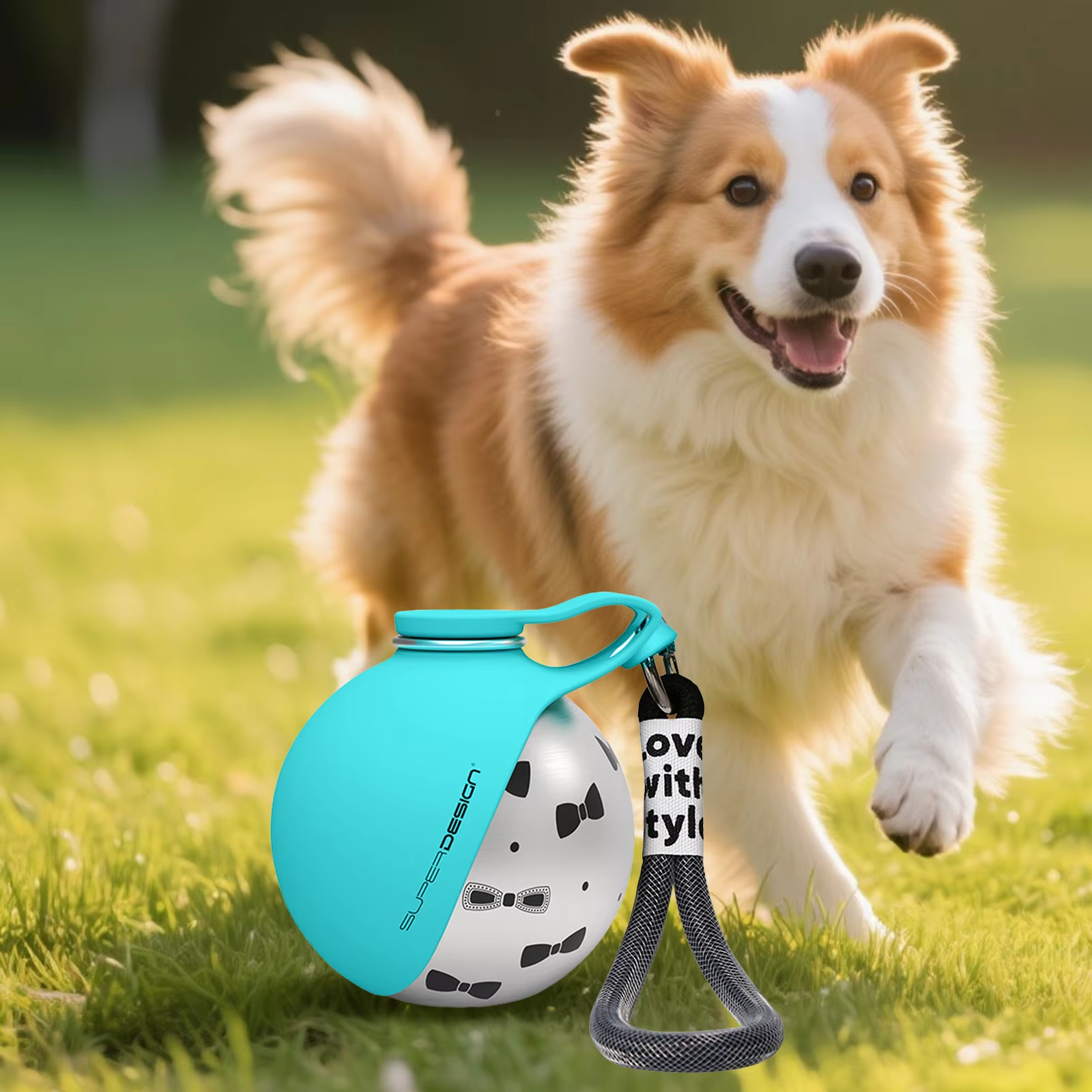
This is actually the exact gap a lot of “2-in-1” style dog water bottles are designed to close — something small enough to clip to a leash, that unfolds into a bowl shape on demand, so there’s no separate bowl to carry or lose. If you’re the type who’s tired of a soggy pocket from a leaking bottle, it’s worth looking at options with a genuinely leak-proof seal and a silicone bowl that folds flat when it’s not needed — something like this portable water bottle and bowl combo is a reasonable example of the category: stainless steel body, food-grade silicone bowl, and a strap that clips right onto a leash or bag, so it’s there when you actually need it instead of at the bottom of a backpack.

The Bigger Picture
None of this is about buying more gear for its own sake. It’s about making the right habit — stopping for water, often, before your dog is visibly struggling — easier to actually follow through on. The gear is just there to remove friction, not to replace attention. Your dog can’t tell you when they’re thirsty in so many words, so a little bit of built-in planning does that job for them.
Next time you head out for a walk that’s longer than a quick loop around the block, bring water before you think you need it. Your dog will thank you — probably by falling asleep on the car ride home.
